
Insights
The speed-to-quote benchmark
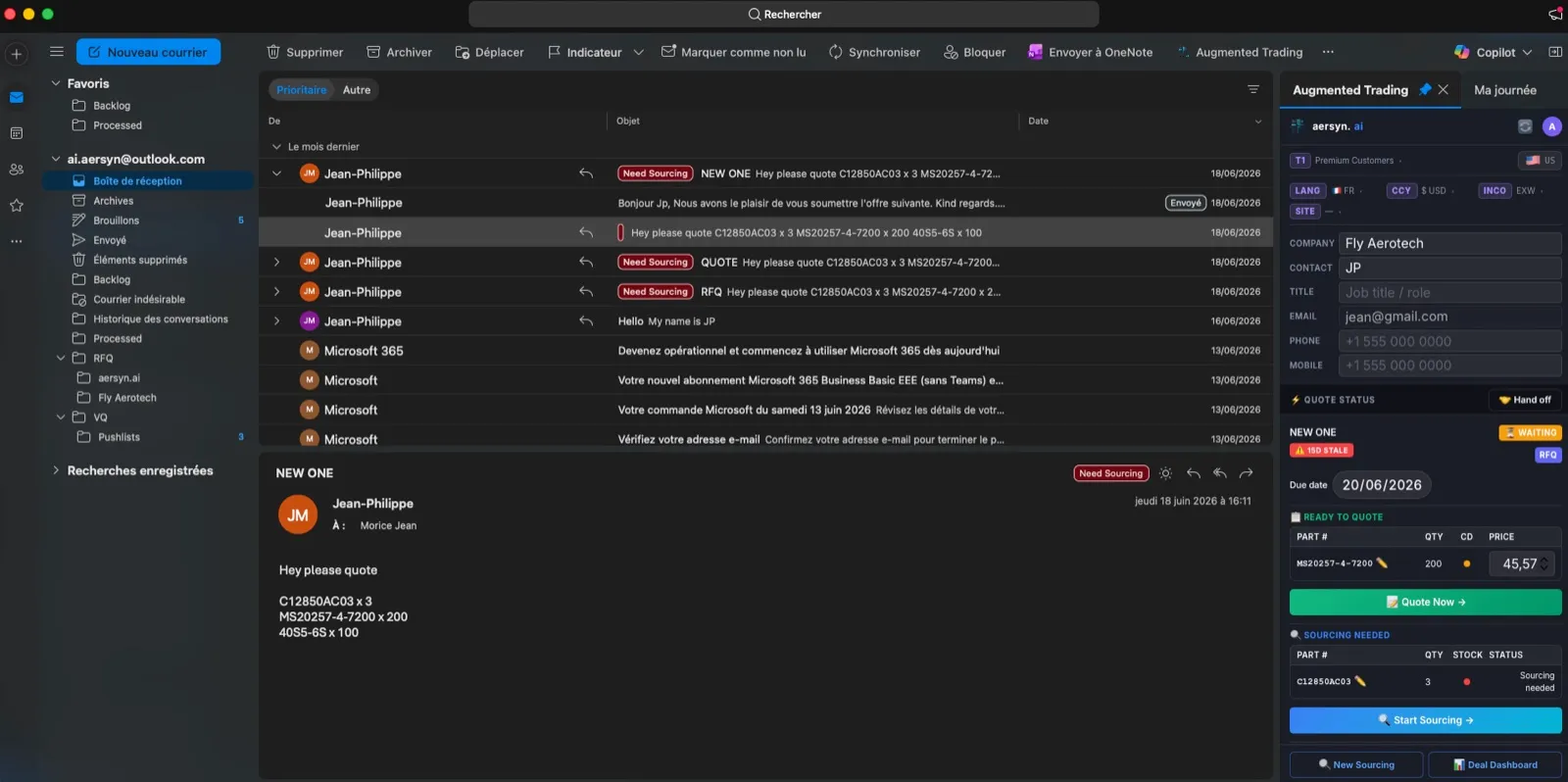
When I was quoting parts at Thales, a typical RFQ landed on Tuesday at 3pm and the quote went out Wednesday at 11am. Twenty hours. Nobody on the desk thought that was slow, because everyone worked that way. Check the ERP, check the history, price it, get it validated, build the PDF, write the email. Repeat fifty times a day.
Twenty hours felt normal. It was already losing deals.
What is a good speed-to-quote?
On a parts trading desk today, same-day is the floor, under an hour is good, and under fifteen minutes puts you ahead of almost everyone. That is not a number aersyn.ai invented. It is what the buyer’s side of the table imposes. An AOG desk or a purchaser with a grounded check does not wait politely for every distributor to answer. They work with the quotes they have in hand.
If your median response time is measured in hours, you are not competing on price or stock. You are competing on whether your email arrives before the buyer stops reading.
Why does the first serious quote usually win?
Because the buyer’s process rewards it, not because the buyer is impatient. A purchaser facing hundreds of open lines shortlists the first workable answers, starts the comparison, and often builds the PO before the slow quotes arrive. A quote that lands the next day is not a losing quote. Most of the time it is a quote nobody reads.
I have watched this from both sides. As a trader, the deals I won fastest were the ones where I happened to be at my desk when the RFQ came in. Same stock, same price logic, different timing. Timing decided.
How do you measure where your desk stands?
Pull one week of RFQs from your inbox and compare two timestamps: when the email arrived and when your reply left. Take the median, not the average, so one forgotten RFQ from Friday does not distort the picture. Do it per trader and per demand type, because an AOG request and a stocklist fishing email deserve different clocks.
Most desks that run this exercise for the first time find a median far worse than what they would have guessed. Not because traders are slow, but because RFQs queue behind everything else.
What actually slows a desk down?
The rebuild, not the decision. Deciding a margin on a part you have sold for years takes seconds. What takes minutes is everything around it: alt-tab to the ERP, check stock, check the last sale, retype the part number, verify a colleague did not already quote it overnight, generate the PDF, write the email, attach, send.
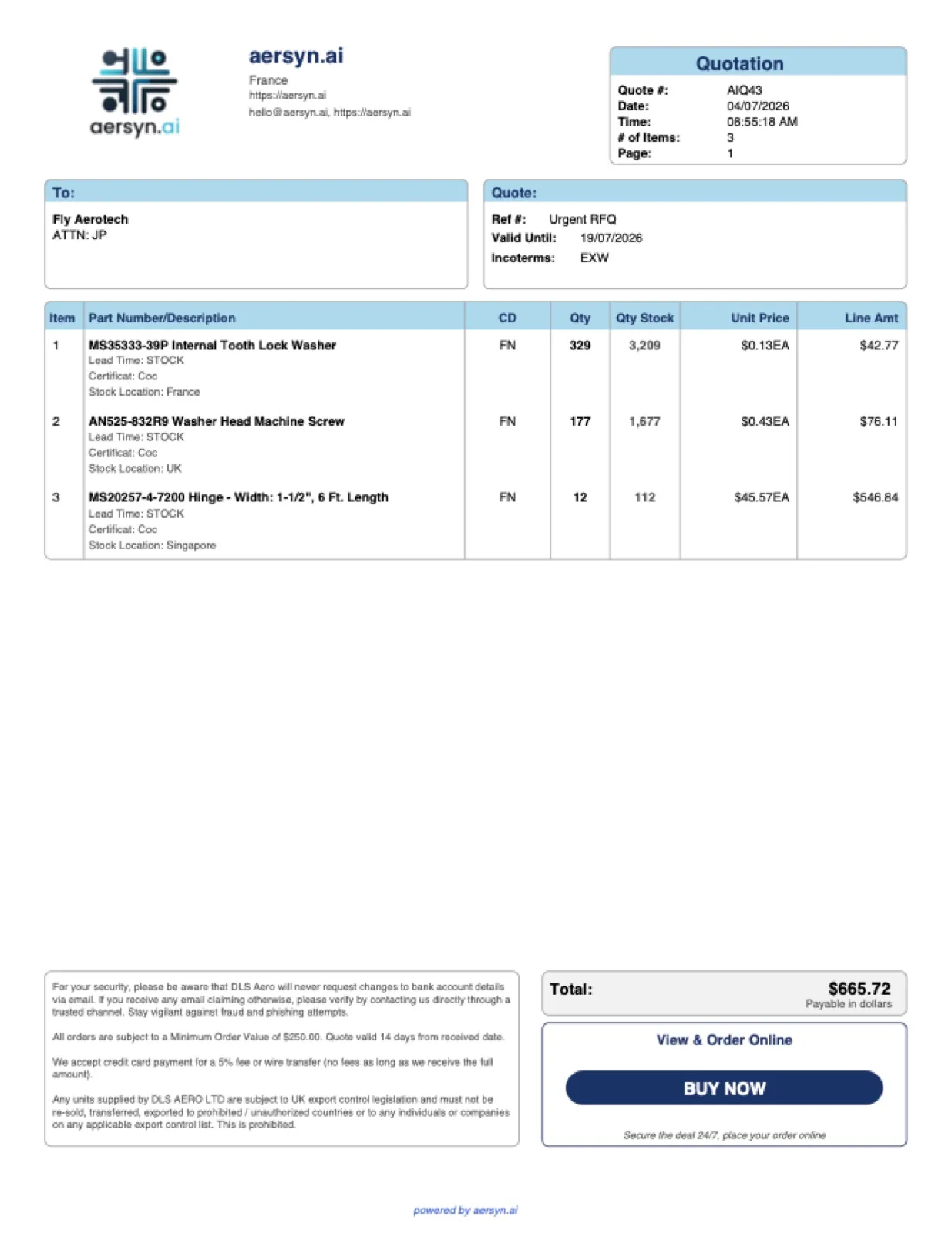
Multiply that by every RFQ in the queue and the desk saturates long before the traders run out of judgment. That is the part worth automating: the typing and the fetching, never the decision. It is the whole logic behind how we built the RFQ-to-PO cycle at aersyn.ai, and it is why the trader still reviews every draft before it leaves.
Where should you set your own benchmark?
Set it against your buyers’ clock, not against your current median. If your customers issue POs within a few hours of sending an RFQ, a same-day quote is already too late for the deals that matter. Measure this week’s median, decide what the winning number is for your market, and close the gap. Speed-to-quote is one of the few levers on a trading desk where the improvement shows up in the order book within weeks.