
Insights
How fast should your quoting software vendor fix a problem you report?
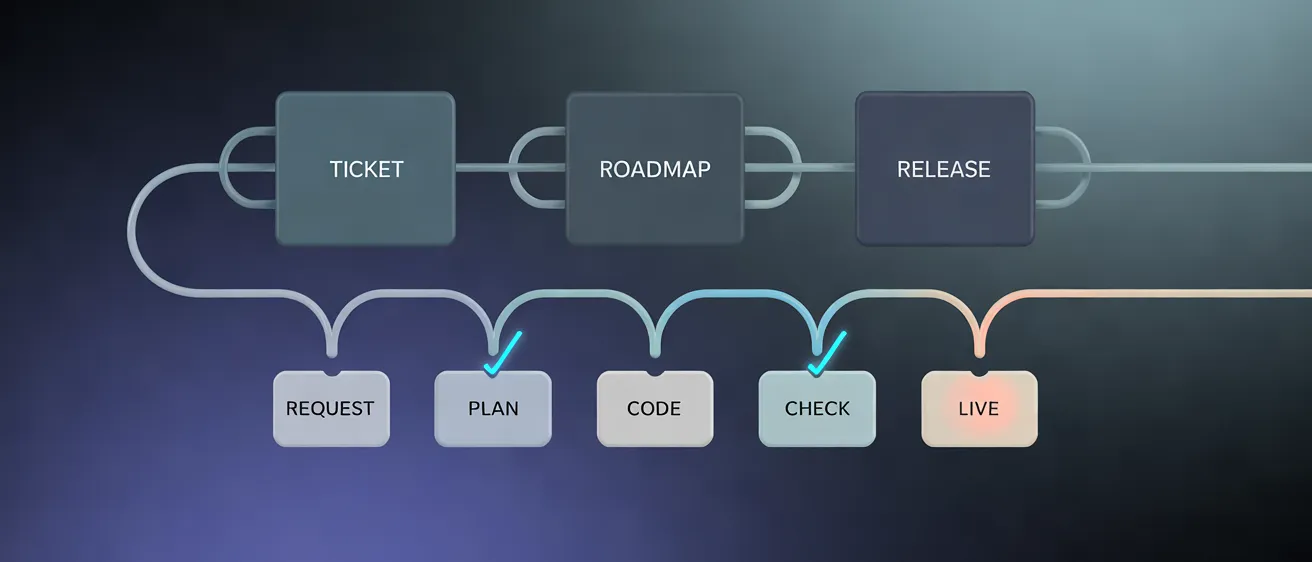
It depends on how many people stand between your trader and the code. When a reported problem goes through a ticket queue, a product roadmap and the next release, a simple fix can wait for weeks. At aersyn.ai, the request comes straight to me, my AI coding agents prepare the fix and I check it before it ships, so a fix is often live within hours.
Why can a simple fix take weeks?
Because the person who sees the problem is rarely the person who writes the code. Your trader notices a wrong value on a quote. He writes to support. Support opens a ticket, a product manager ranks it and a developer picks it up when the roadmap allows.
Each handover costs time. It also costs part of the idea: what your trader meant and what the developer finally built are rarely the same thing. Even a correct fix then waits for the next release.
What happens when you report a problem to aersyn.ai?
In November 2026, a client asked for a fix to currency handling in vendor quotes.
The request came in on WhatsApp. Email works too. My customer support agent captures it and my AI proposes an action plan. I validate the plan, then the AI writes the code.
Depending on the job, the change is ready a few dozen minutes later, once its tests have passed. I check what was produced. Then it goes live and the client’s problem is solved.
There is no ticket queue in that chain. You reach the founder directly, with live support in English and French from 6am to 11pm Central European Time, as the security page explains. Our terms say support response times are reasonable but not guaranteed.
Does a faster fix mean less checking?
The checks stay, at two points. I validate the plan before any code is written and the result before it ships. The tests run in between. When a change touches the interface, I open the new version and test it myself.
A step that waits for my validation does not go out without me. When the machine goes that fast, the person who validates sets the pace. So I organize my day to be available when a step is ready for me.
Which changes need no new release at all?
Many requests are not code. In aersyn.ai, message templates, price rules and AI prompts are set per company. Adjusting them is a settings change, made without a new release.
That is often how a desk asks for things during rollout: the first trader starts quoting and asks for the adjustments that fit the way he works. The rollout itself is covered in how to get your traders to adopt new quoting software.
What should you ask a vendor before you sign?
- When my trader reports a problem, who receives it and through which channel?
- Who decides that it gets fixed and when?
- Who checks the change before it reaches my desk?
- Which changes are settings and which need a release?
- Is a response time written into the contract, or only promised in the sales call?
Why does this matter on your trading desk?
Your trader is in the same position as the person who validates the code. With aersyn.ai, when he opens an RFQ in Outlook, the last sale, the history with this customer and the availability are already there. He no longer has to look for them.
The price and the supplier stay his decision. The one exception is auto-quotes on your own stock, which go out automatically only if you turn them on. Everything else waits for him. That is the human in the loop, the same rule I apply to my own code.
To see what your trader gets on a real RFQ, follow the product tour.