
Insights
How do you get your traders to adopt new quoting software?
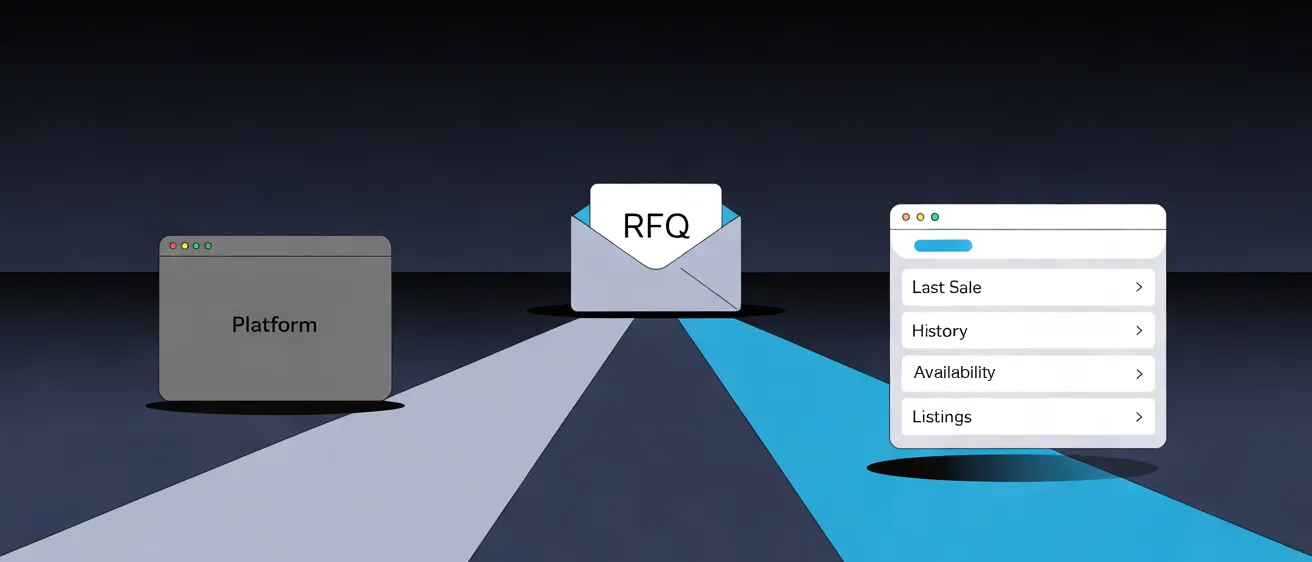
Start with one trader on real RFQs and adjust the software until it has a place in his daily routine. Then let that trader show it to the colleagues who start next, in his own words and with the limits of the software. The hard part of adoption is the reflex of a fast trader.
Why is adoption harder than the demo suggests?
A demo shows the software. It does not show the habit the software has to replace. A fast trader has routines learned over years: a request comes in, he goes straight to a platform like ILS or PartsBase and he does his quote. His speed comes from that routine. It is his expertise.
A new system only works if it earns a place in that routine. With aersyn.ai, when the trader opens the RFQ in Outlook, the last sale from the ERP, the history with this customer, the availability and the listings are already there. On the first day, the routine is still years ahead of the system.
Why does the vendor’s demo not settle it?
My own demo of aersyn.ai is a marketing demo. I know it by heart: which request to open and when to show the screen that makes eyebrows go up.
What a demo cannot show is the switch: the moment a trader stops going to the platform first. Only someone who has made that switch can talk about it. The vendor has not made it.
Who should show the software to the next traders?
The first trader who uses it on real work. At one of my clients, I asked the first trader on aersyn.ai to give the tour to the colleagues starting after him. In his own words, with the way he started using it and with the limits of aersyn.ai, without a filter.
He works with the software on real requests, with his own customers on the line. He knows what is useful to him. And he has made the switch: today, when a request comes in, he goes to aersyn.ai first.
People ask a colleague questions they do not ask the founder who came to present his product. Where does it get things wrong? What did you change in your day? A trader who uses the software every day can answer from his own desk.
What does the vendor do during that session?
Listen. When the first trader names a limit, the vendor hears it from real use, in front of the people who will use the software next. That is where the next adjustments come from.
In aersyn.ai, message templates, price rules and AI prompts are set per company, so many of these adjustments are made in the settings, without a new release. The trader still keeps every decision that commits the company. He checks what the AI read, picks the supplier, sets his price and sends the quote. That is the human in the loop. A colleague’s tour does not change it.
How should you plan the rollout on your desk?
- Pick a first trader among your fast ones. If the software earns a place in his routine, the others will hear it from someone they trust.
- Let him work on real RFQs before anyone else starts. Setup is done with that pilot trader, who starts quoting and asks for the adjustments that fit the way he works.
- Plan the peer session before the next traders start, with the vendor in the room but not at the keyboard.
- Ask him to include the limits. Your next traders will trust what he says about the strengths only if he also says where it falls short.
If you are still choosing the software, start with how to judge an AI tool for aircraft parts quoting. To see what your trader would find in Outlook on a real RFQ, follow the product tour or the ILS and PartsBase integration.